




Category: First Team
Miller: “Excited to open the league campaign”
“We believe that with the fans in Batumi, we’ll get the job done”
do Shahar celebrated his birthday with a temporary equaliser in the away match against Lugano, but unfortunately for Maccabi Tel Aviv, the first of the two Conference League Play-Off matches ended in a 2-1 defeat in Switzerland. The midfielder shared his disappointment with the result after the final whistle, while expressing strong belief ahead of next week’s return leg at the Batumi Stadium.
“To be honest, I would have been much happier if we had won this game and I had received the perfect birthday present,” Shahar said after the match. “Yes, I’m happy with my goal. It was the equaliser, but unfortunately we ended up losing. Having said that, as a team we fully believe that with the support of the fans next week in Batumi, we’ll get the job done.”
Speaking about the Swiss opponents, the midfielder added: “They’re a very strong and intense team. There’s a reason they’re currently top of the table in Switzerland and the only team there with a perfect record. But again, this is Europe. It’s great to be playing in Europe and it’s great to be involved in these kinds of matches. This is why we win championships and trophies – to play games like these and ultimately reach the league phase. We also have to know how to beat and get past teams like this, and I truly believe we’ll do that next week.”
“The result isn’t ideal, but we’re still very much in the tie,” he continued. “This is only half-time in the tie. We’re one goal behind, but everything is still open. We’re very much alive, and we’ll do everything we can to win the game and qualify for the next round next week.”
Before the decisive European fixture, Maccabi will begin their league campaign against Hapoel Jerusalem this coming Sunday: “We can’t forget that before the return leg, we have our opening league match against Hapoel Jerusalem. Again, we want to do everything we can to win that game and go into next week with good momentum.”
Miller: “This tie is very much alive”
Davida: “Lugano are a good team, but so are we”
Osher Davida remained confident ahead of the Conference League Play-Off first leg away to FC Lugano.
“That is the beauty of football, sometimes the conditions are like this and sometimes they’re different,” Davida said shortly after arriving at the AIL Arena where the weather conditions in Switzerland are different to the ones in Tel Aviv. “We’re used to the heat in Tel Aviv, and I think the weather here is much better for football. We’re happy that’s the case and we’ll go out there and try to play as well as we can.”
On the mood following last week’s victory in Bulgaria, despite the elimination from the Europa League, he added: “We came very close to completing a comeback against CSKA, and although in the end we didn’t go through, we won 3-1 away from home in a difficult game. We’re coming into this in a good mood. We also won the Toto Cup Semi-Final last Sunday and we’re on a winning run. Hopefully we can continue that tomorrow as well.”
On the in form Swiss opponents and the fact that this is the first of a two legged tie: “Lugano are definitely not an easy team. We have watched and analysed them. They’re a good team, but so are we, and tomorrow we’ll come out and show that. You always know there’s another game the following week and no team goes all-in in the first leg, but in my opinion we need to approach this as a one-off game. We shouldn’t think about the return leg, but instead play the way we know how and win.”
Miller: “If we can replicate last week’s level of performance, we’ll be in a good position”
Thank you Addo
Henry Addo will leave Maccabi Tel Aviv and join C.D. Tondela, following an agreement reached with the Portuguese club for the transfer of the 23-year-old Ghanian forward.
Addo, who spent last season on loan with OFK Belgrade where he scored 2 goals in 16 appearances, joined Maccabi Tel Aviv in February 2024 from Zilina.
At Maccabi Addo made a total of 31 appearances in all competitions scoring three goals and was part of the team that won 2 Championships, a Toto Cup and Super Cup. Addo also featured in Maccabi’s 24/25 Europa League campaign, scoring two goals in 11 appearances.
Thank you, Henry, for your contribution to Maccabi and best of luck in your future career.
Schwartz joins Hapoel Ramat Gan on loan
Noam Schwartz joins Hapoel Ramat Gan after an agreement was reached between the two clubs for a season-long loan deal of the 20-year-old right-back.
Last season Schwartz made 38 appearances in all competitions during a loan spell with second-division side Hapoel Kfar Shalem.
Schwartz is a member of the Israel U21 squad for which he made 4 appearances as he also represented Israel’s young national sides at U-19 and U-17 levels and scored a goal in a total of 17 appearances.
The full back will now continue his development with newly promoted side Hapoel Ramat Gan as he embarks on another season of senior football.
Good luck Noam.
A numbers game: The 15th time in the Play-Offs
Maccabi will continue its European campaign on Thursday with a trip to Switzerland for the first leg of the Conference League play-off match against Lugano. Ahead of the important match we look at the numbers accompanying Maccabi into the play-off round.
15 out of 18: Maccabi back in the Play-Offs
The play-off round in UEFA’s European competitions was introduced in its current format in the 2009/10 season as the final round before the group stages, and later the league phase, of the various club competitions.
Of the 18 seasons in which the round has been played, Maccabi reached this stage 15 times, including this season.
That is the highest number of appearances among the seven Israeli clubs that have reached the Play-Off round of one of the European competitions.
Prior to this season, Maccabi participated in 14 different Play-Off ties across all three competitions.
The road to the next stage
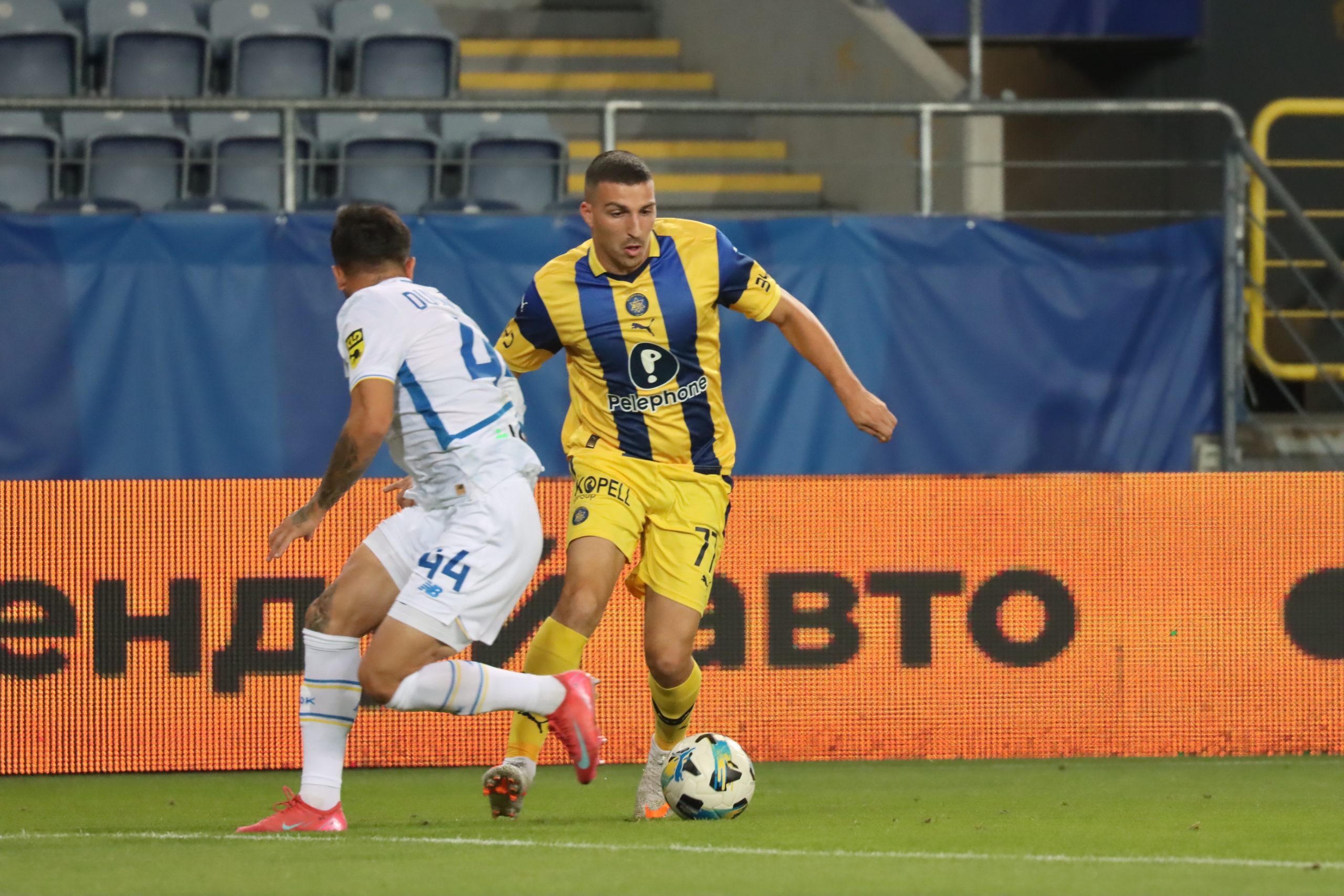
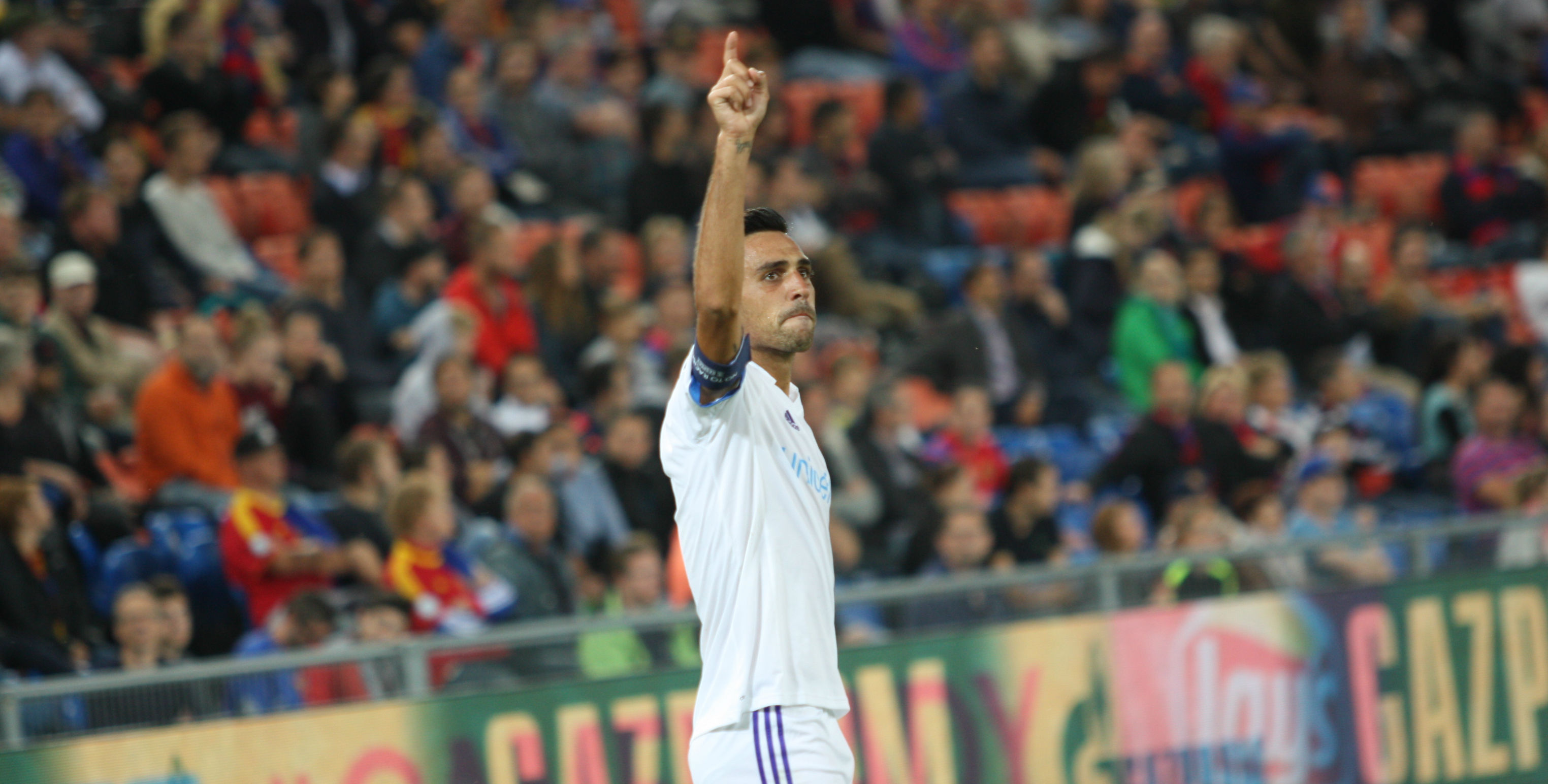
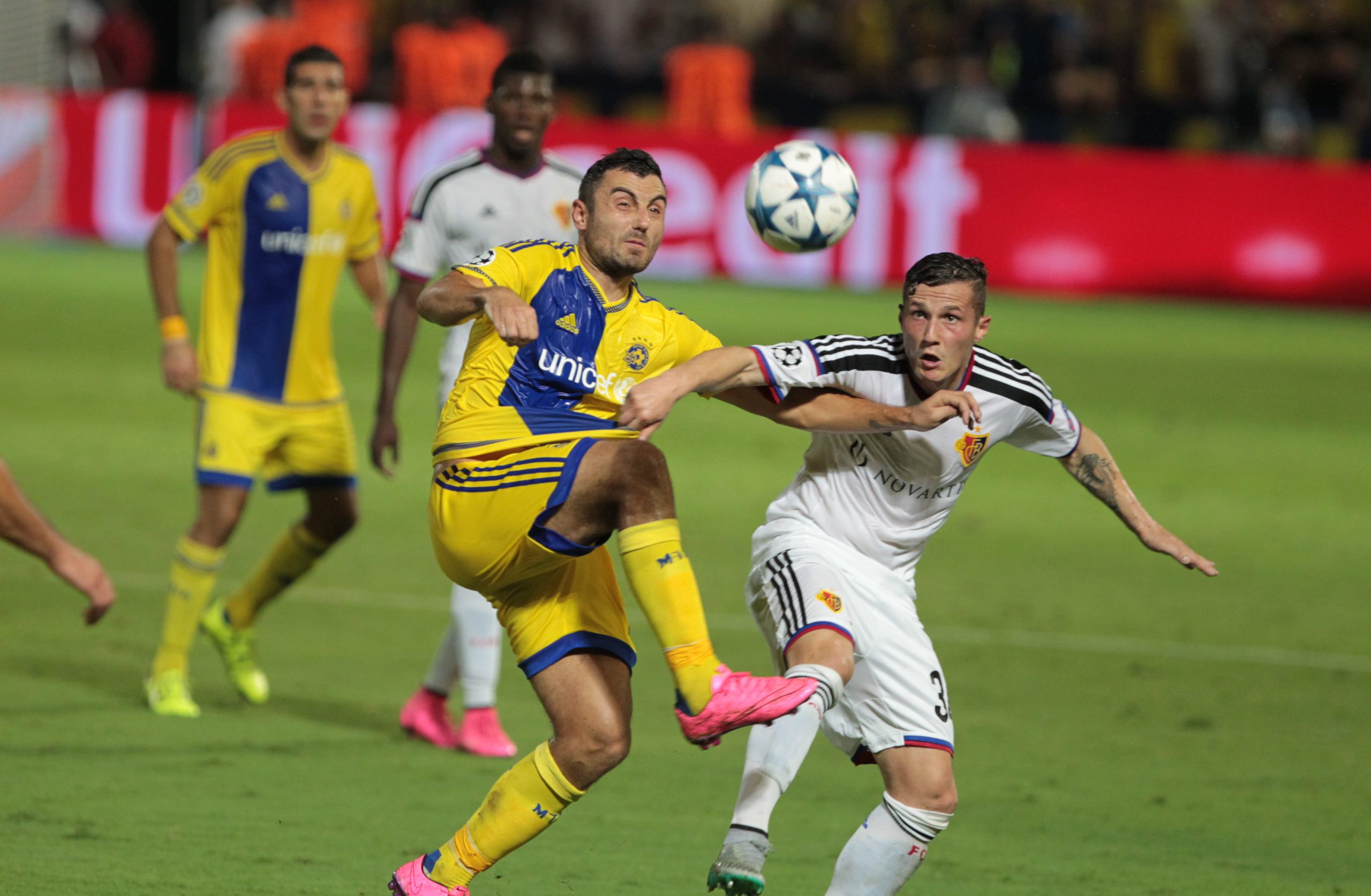
Maccabi appeared in the Champions League play-off twice with the most memorable one played in the 2015/16 season. A dramatic match at the St Jacobs stadium in Basel saw Maccabi clinch a 2-2 draw in Switzerland before a 1-1 draw in the return leg at Bloomfield secured qualification to the Champions League group stage.
Over the years Maccabi gained a lot of experience in the Europa League Play-offs. On six occasions Maccabi successfully navigated the round and advanced to the group or league phase of the competition. In the 2013/14 season, Maccabi advanced without playing a match after their Ukrainian opponents were expelled from the competition.
On the other hand, Maccabi’s European campaign ended in the Europa League Play-Offs on three occasions: against Paris Saint-Germain (10/11), Asteras Tripolis (14/15), and Sarpsborg (18/19).

What about the Conference League?
This will be Maccabi’s fourth appearance in the Conference League Play-Offs. On the first two occasions, Maccabi successfully advanced, overseeing Shakhter Karagandy (21/22) and Celje (23/24).
The only time Maccabi were eliminated in the Conference League Play-Offs was by French side Nice (22/23).
Zahavi on top, Yeini the appearance record-holder
Twenty-seven Maccabi players managed to score goals during the play-off matches over the years.
Eran Zahavi leads the goalscorers chart, with seven goals in the play-off round, making him Maccabi’s all-time leading scorer at this stage of European competition.
In terms of appearances, former captain Sheran Yeini made 15 appearances in Play-Off matches, more than any other player in Maccabi history.
Of the current squad, Dor Peretz stands out as the 31-year-old is ranked fourth on the club’s all-time appearance list in this stage, with 10 European play-off appearances.
5-1 and six historic minutes
The highest victory in the Play-Off round was recorded two years ago in the Europa league in the 24/25 season. Maccabi beat Serbian side Bačka Topola 5-1 with Henry Addo scoring a brace, while Tyrese Asante, Dor Turgeman and Ido Shahar were also on target. Addo scored the opener of the match that entered the club’s history books as his goal was in the second minute, becoming Maccabi’s fastest-ever goal in European competition.
Four minutes later, Addo doubled his tally to score the fastest brace by a Maccabi player in the club’s history in all competitions.
Facing a Swiss opponent once again
Lugano will be the third Swiss opponent Maccabi have faced in their European history.
To date, Maccabi played eight matches against Swiss clubs, six against Basel and two against Grasshoppers. Maccabi have yet to beat a Swiss opponent, recording five draws and three defeats.
However, one of the most memorable and important ties in the club’s history came against a team from Switzerland.
In the 2015/16 Champions League play-offs, Maccabi drew 2-2 with Basel in Switzerland and 1-1 in the return leg. Those results sent Maccabi through to the Champions League group stage on away goals, a rule that was in effect at the time.
Lugano already familiar with Israeli opposition
For Lugano, facing an Israeli club is not new. The Swiss side previously faced Hapoel Be’ersheva twice in European competition. Lugano faced Be’ersheva in the Europa League group stage (17/18), and once in Conference League qualifying phase (22/23). Be’ersheva won three matches while Lugano won once.
Israel vs. Switzerland
Over the years, Israeli clubs played 16 matches against Swiss opposition, winning 3 matches, drawing 7 and losing 6 with a total goal tally of 21-16 in favor of the Swiss Clubs
On Thursday, Maccabi will look to improve both the Israeli record against Switzerland and, more importantly, take a significant step forward in their 15th European play-off tie on the road to another European campaign.
Baye join Kfar Shalem on loan
Orel Baye joins Hapoel Kfar Shalem after an agreement was reached between the two clubs for a season-long loan deal of the 22-year-old winger.
Baye, scored one goal in nine appearances at Hapoel Jerusalem, and in the second half of the 2025/26 campaign added five more appearances in the top-flight during a loan to Hapoel Petah Tikva.
Baye will continue his development during the 2026/27 season at Hapoel Kfar Shalem.
Good luck Orel.
